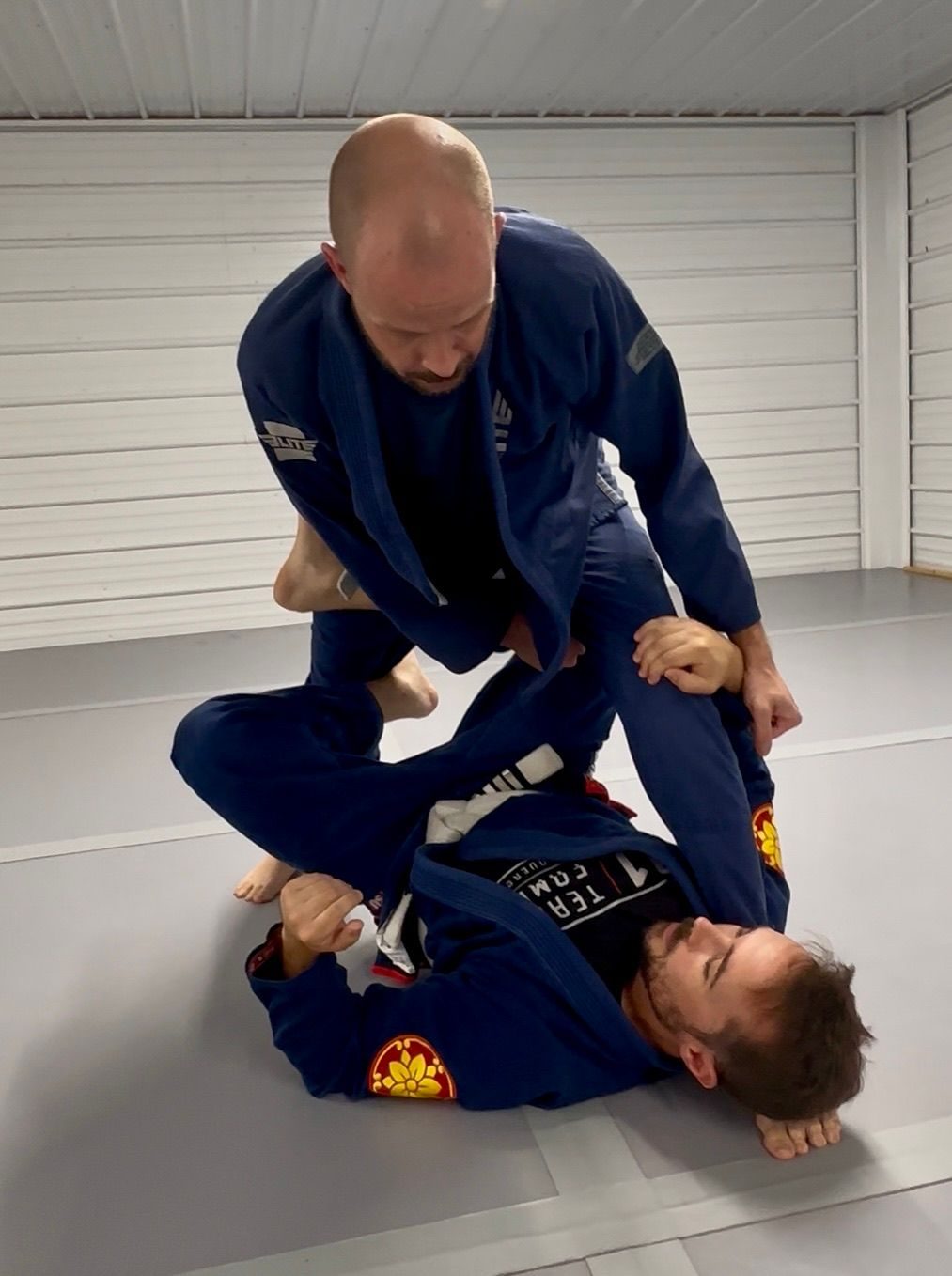
If you are searching for BJJ self defense, you may be wondering whether Brazilian Jiu Jitsu actually helps outside the academy.
At Moxie Jiu Jitsu, we serve New Holland and the surrounding eastern Lancaster County communities, so this is a question we hear from people across the area, including Leola, Ephrata, and East Earl.
The honest answer is yes, especially in close-range situations where someone grabs, tackles, pins, or tries to control you. But Jiu Jitsu is not a force field. It does not make every dangerous situation safe, and it does not replace awareness, de-escalation, or leaving when you can.
The practical value of jiu jitsu self defense comes from consistent training. Over time, you learn how to use leverage, manage position, stay calm under pressure, and create opportunities to get away. You also build fitness and confidence without needing to be aggressive or looking for a fight. Those are some of the real everyday benefits of jiu jitsu, especially for people who want a steady, skills-based approach to personal safety.
Here are five real-life situations where brazilian jiu jitsu self defense can genuinely help.
1. Someone grabs your wrist or arm
What actually happens
A grab may happen quickly and unexpectedly. Someone could seize your wrist, pull your arm, grab your clothing, or try to stop you from walking away in a parking lot, at work, or during an ordinary day around New Holland or Leola.
Many untrained people react by pulling straight back. That can lead to a strength contest, especially if the other person is larger or has a better grip. It is also easy to panic and lose awareness of what is happening around you.
Why Jiu Jitsu training helps
BJJ teaches you to pay attention to grips, posture, balance, and direction. You learn that the strongest response is not always to pull harder. Position, angles, movement, and using your whole body can matter more than trying to overpower one arm.
Training with a resisting partner also makes physical contact feel less unfamiliar. You get practice staying composed while someone is holding onto you. That ability to breathe, think, and move instead of freezing is one of the most useful benefits of Jiu Jitsu.
The honest limits
A wrist-grab lesson is not a guaranteed escape from every grab. The person may have another hand free. They may be stronger, intoxicated, or determined to keep attacking. There may also be other people or obstacles nearby.
The goal of self-defense is not to win a technical exchange. It is to create space, move toward safety, call for help, and leave.
2. You are pushed, cornered, or pulled into a clinch
What actually happens
Not every confrontation begins with a punch. A person may crowd you, push you into a wall, grab around your upper body, or try to force you backward.
This close standing range can be confusing if you have never trained there. Balance can disappear quickly, and it may be difficult to move freely while someone is pressing into you. A lot of people new to self defense for beginners training are surprised that it starts with learning what to do when someone gets too close, not with flashy techniques.
Why Jiu Jitsu training helps
A major part of grappling for self defense is learning what happens when two people are close together. BJJ develops awareness of balance, base, pressure, and body position. You learn how to avoid being easily moved or controlled and how to work from an uncomfortable position. That is a big reason many people looking for self defense classes in Lancaster County end up interested in Brazilian Jiu Jitsu.
The practice is progressive. You are not expected to understand everything on your first day. In a structured class, an instructor can break down movement into manageable steps and help you apply it with a cooperative partner before introducing more resistance.
That process can build quiet confidence. You become more familiar with physical pressure, which can make it easier to stay calm and make a decision.
The honest limits
Brazilian Jiu Jitsu does not automatically prepare you for every kind of striking attack. A real confrontation may involve punches, kicks, hard surfaces, or more than one person. A wall is not the same as a padded mat.
If you can create distance and leave, that is usually the better option. BJJ is most useful here as a way to manage an unavoidable close-range struggle long enough to disengage or reach safety.
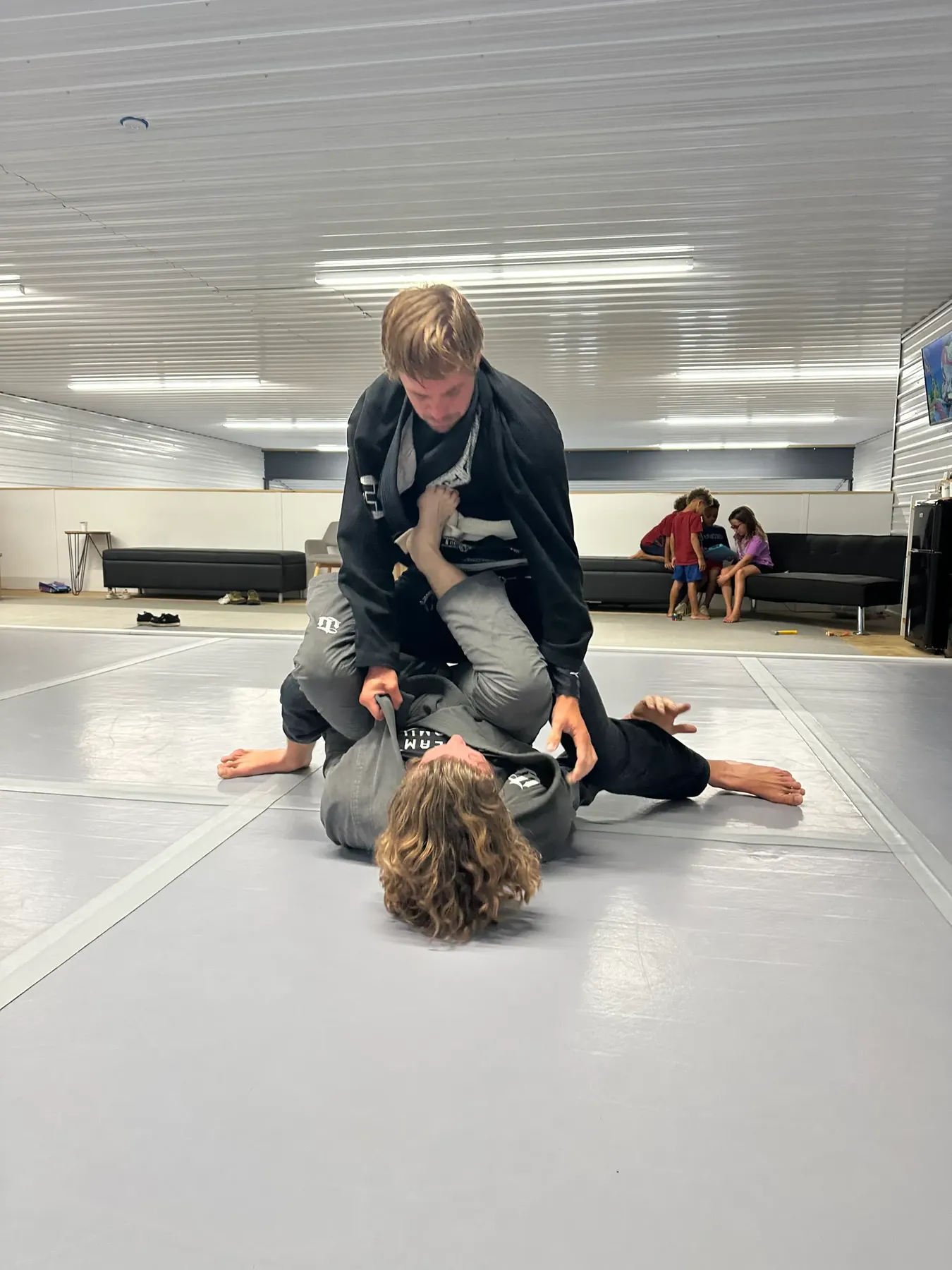
3. Someone gets on top of you on the ground
What actually happens
A fall, tackle, or shove can put you on the ground. The other person may end up on top, making it difficult to move or stand. This is one of the situations that causes the most anxiety for people who are new to self-defense. That concern is universal, whether you train in New Holland or anywhere else in the county.
Being underneath someone can feel overwhelming. It is hard to use strength effectively when your movement is restricted and your breathing becomes rushed.
Why Jiu Jitsu training helps
Ground positions are a central part of BJJ. Students learn how to recognize when they are in a vulnerable position, protect space around their head and body, and work toward a better position.
That does not mean memorizing a magic move. It means developing several connected skills:
- Using posture and frames to create space.
- Understanding where your balance is and where the other person’s balance is.
- Moving your hips instead of relying only on your arms.
- Staying aware of position while under pressure.
- Working toward control, an escape, or a safer direction.
This is where live practice matters. A training partner provides realistic resistance in a controlled setting. You learn what it feels like when a movement does not work perfectly and how to keep solving the problem.
The honest limits
The ground can be dangerous. Concrete, curbs, furniture, and other people change the situation completely. If there are multiple attackers, staying on the ground may create additional risk.
A responsible self-defense approach does not treat going to the ground as the goal. It teaches you how to respond if you are already there and how to look for a safe opportunity to get away.
4. You are in a standing confrontation and need to disengage
What actually happens
Sometimes the most useful skill is not controlling someone. It is recognizing that a situation is getting worse and leaving before physical contact begins.
A person may be angry, yelling, blocking your path, or trying to draw you into an argument. You may need to stay balanced, keep enough space to move, and avoid being trapped while looking for an exit. For most people, everyday self-defense looks more like staying calm and getting out than trying to dominate someone.
Why Jiu Jitsu training helps
BJJ develops awareness of distance, posture, pressure, and movement. It also gives you regular practice managing stress. During training, someone may move quickly, apply pressure, or put you in a difficult position. Over time, you learn that discomfort does not always require a panicked reaction.
That can support better decision-making. You may be more likely to use a calm voice, move toward other people, keep an exit available, or ask for help instead of trying to prove something.
This is an important part of self defense for beginners to understand: self-defense is not about becoming more eager to fight. It is about becoming more capable of making a safe choice when things feel uncertain.
The honest limits
No martial art can guarantee that a confrontation will not become violent. You cannot control another person’s behavior. De-escalation may fail, and leaving may not always be immediately possible.
Training should support good judgment, not create overconfidence. The safest outcome is often the one where nobody has to fight.
5. You need to get back to your feet safely
What actually happens
If you are knocked down or lose your balance, the next challenge is not always controlling the other person. It may simply be standing up without giving them an easy chance to keep you down.
Getting up while rushed or off-balance can expose you to another grab or takedown. It can also cause you to trip, turn away, or lose track of what is happening around you.
Why Jiu Jitsu training helps
BJJ teaches transitions between positions. You learn how to move from being pinned or underneath someone toward a position where you can stand, create distance, or get to safety.
This develops coordination and body awareness. You become more comfortable using your hands, feet, hips, and core together. You also learn to keep paying attention while changing positions instead of rushing blindly.
The ability to stay calm during that transition is just as important as the movement itself. Training helps you practice making space and choosing a direction rather than simply scrambling.
The honest limits
Standing up safely depends on the environment and the situation. An attacker may be holding onto you. There may be a weapon, multiple people, or a dangerous surface nearby. If the threat is still present, getting up does not automatically mean you are safe.
The larger goal is to reach a safer location and get help as soon as possible.
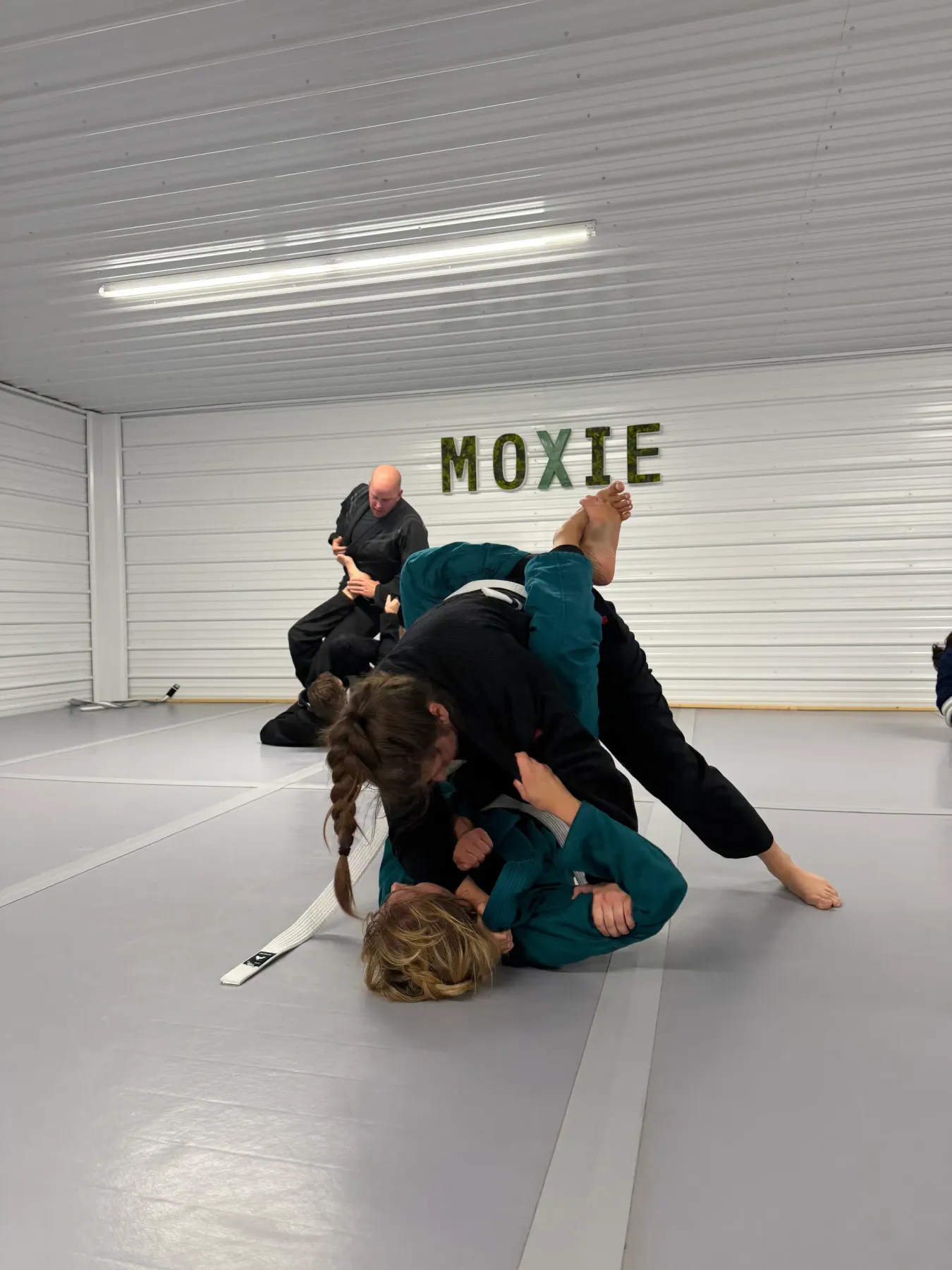
What BJJ self-defense does not do
It is worth being clear about the limits of BJJ self defense.
Jiu Jitsu is especially useful for one-on-one grappling situations. It helps you understand close contact, control, escapes, and pressure. It can also improve fitness, coordination, confidence, and composure.
But it is not a complete answer for every threat.
- It does not make you immune to punches or other strikes.
- It does not make multiple attackers safe to engage.
- It does not make a weapon situation manageable.
- It does not guarantee that a technique will work in an unpredictable environment.
- It does not replace awareness, de-escalation, escape planning, or calling for help.
Weapon situations are not something to treat casually or train for through a beginner class. If a weapon is involved, prioritize creating distance, finding an exit, and following appropriate emergency guidance. Do not assume that grappling with an armed person is safe.
A realistic way to start training
You do not need martial arts experience to begin. You do not need to be in great shape. You do not need to be aggressive, flexible, or confident already.
At Moxie Jiu Jitsu in New Holland, our adult classes include beginner-friendly fundamentals training for people starting from zero. Lessons follow a clear, progressive curriculum designed by 12-time World Champion Caio Terra. That structure helps you build a solid foundation without feeling like you are expected to know what you are doing before you arrive. If you are comparing self defense classes near me and want something practical without a lot of posturing, that is exactly how we try to teach.
You can learn in regular adult classes, work one-on-one through private lessons for focused development, or start by trying the academy at your own pace. Comfortable athletic clothing is all you need for your first visit.
If you are looking for self defense classes in Lancaster County, we regularly welcome people who drive in from Ephrata, Leola, Akron, Denver, East Earl, and the rest of eastern Lancaster County. Our academy is in New Holland, and many students also come from nearby communities like Blue Ball, Churchtown, Intercourse, Bowmansville, and Terre Hill. If that sounds like a good fit, your next step can be simple: check the schedule and reserve your two free introductory classes. There is no card and no commitment.
Come curious. We will meet you where you are and help you find your place on the mats.